Credentialing is delaying your revenue.
Scheduling is burning out your team.
One Platform Fixes Both.
overtime costs
fill rates
Zentium is an AI-native platform that eliminates the two biggest drains on healthcare workforce operations. Start with credentialing, scheduling, or both: each works on its own, and they're more powerful together.
ZenCheck™
AI-Powered Credentialing
Credentialing shouldn't take 90 days. ZenCheck automates every step from provider intake to payer enrollment, cutting the time between hire and first billable shift from months to weeks.
The back-and-forth never ends. Until now.
Your credentialing team isn't slow. The process is. Chasing down documents from providers, via email, phone, text, is one of the biggest time sinks in healthcare operations. Every follow-up is a manual task. Every incomplete submission means starting over. And providers don't understand why it takes so long, because no one has told them what's still missing.
How Zentium Fixes It:
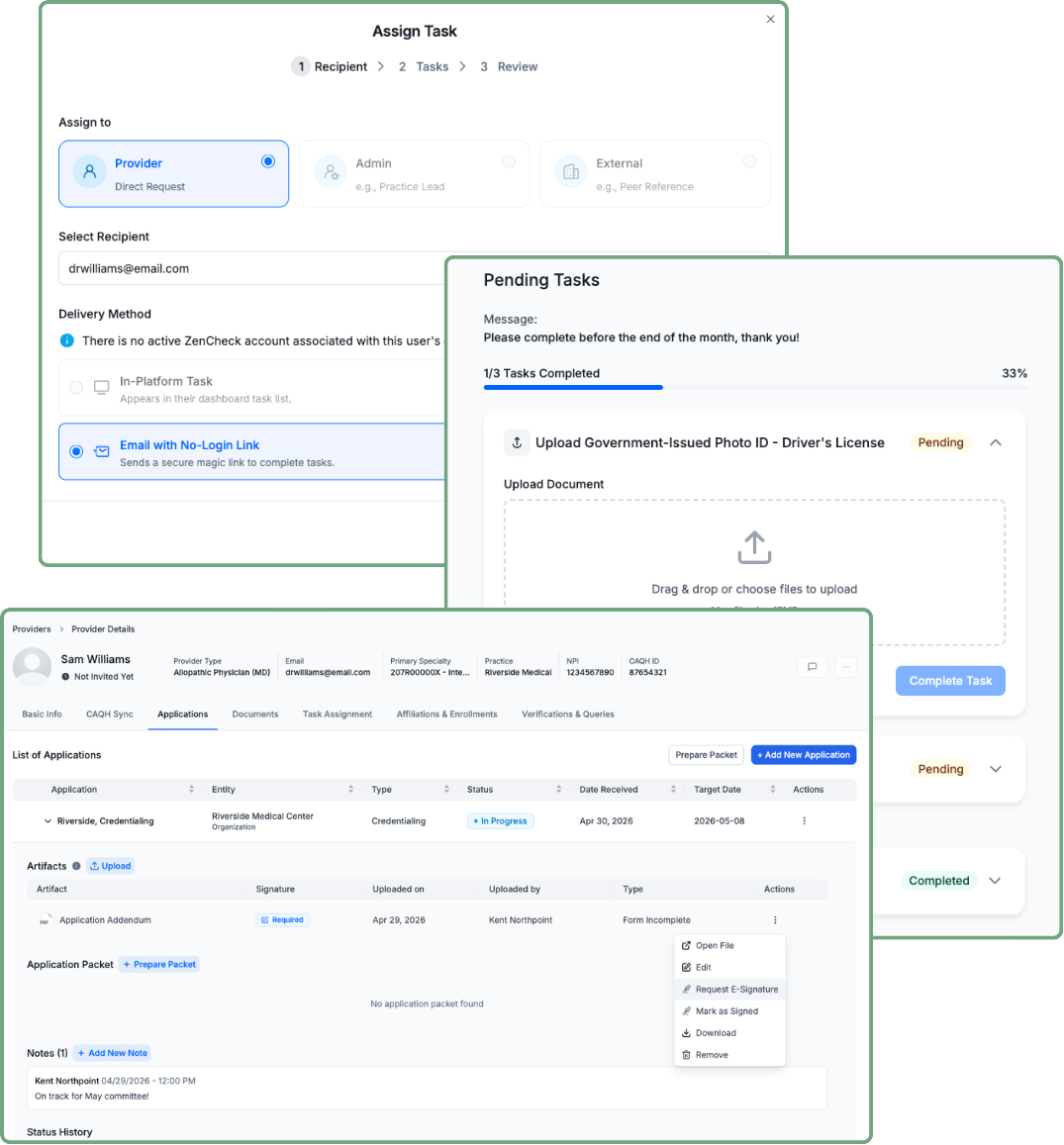
- No-Login Provider Portal – providers submit documents through a guided, simple portal. No account. No IT setup. No reason not to complete it.
- Automated File Request Reminders — follow-up messages sent on a configurable schedule. Your team stops chasing and starts receiving.
- Status Tracking Dashboard — see every active file: what's received, what's outstanding, what's at risk. In real time, without a spreadsheet.
- Task Assignment — documentation tasks routed to the right person with automated reminders and completion tracking.
- Primary Source Verification Workflows — automated queries to issuing boards, agencies, and registries with CAQH data reconciliation.
Cut provider back-and-forth delays to near zero.
Every day without credentialing is money
left on the table.
A provider who is hired but not credentialed is costing you payroll without generating revenue. That gap, between offer and first billable visit, runs 90 to 120 days in most organizations. Multiply it across a growing roster and you have a quiet, compounding revenue problem that rarely shows up in a single line on a report.
How Zentium Fixes It:
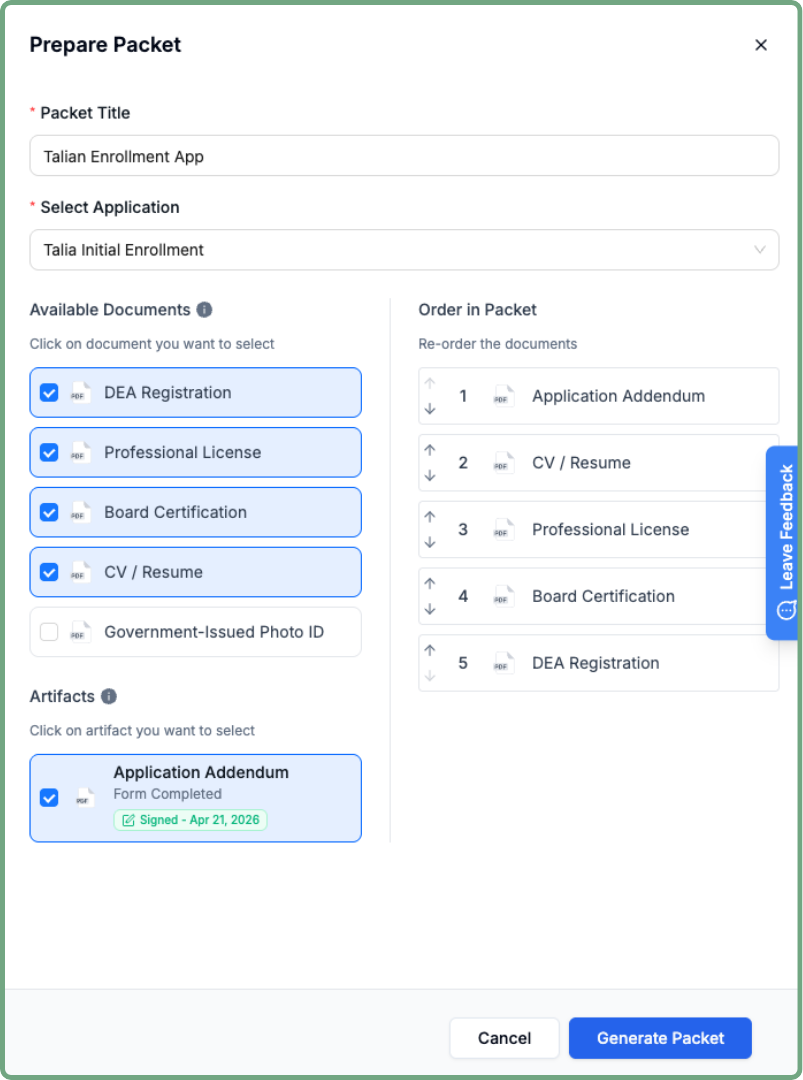
- Payer Enrollment Tracking — every submission tracked from initial packet to payer approval. Nothing left in a queue without a status.
- Enrollment and Privileging Workflow Management — end-to-end visibility so providers don't stall between credentialing approval and billing eligibility.
- Time-to-Bill Visibility — see the gap between clearance and billing eligibility across every provider. Leadership understands the revenue impact, not just the operational one.
- Credentialing-to-Scheduling Integration — when connected to ZenSync, cleared providers surface in scheduling automatically. No manual handoff.
Every week saved is roughly $9,000–$12,000 per provider in recovered revenue.
One bad roster submission costs you weeks.
Payer roster submissions are unforgiving. A missing field, an outdated license number, a mismatched NPI, any of it gets the whole submission kicked back. Then your team resubmits. The payer reviews again. Weeks pass. The provider still isn't enrolled. Roster errors aren't just an administrative frustration, they're a direct cause of delayed revenue and strained payer relationships.
How Zentium Fixes It:
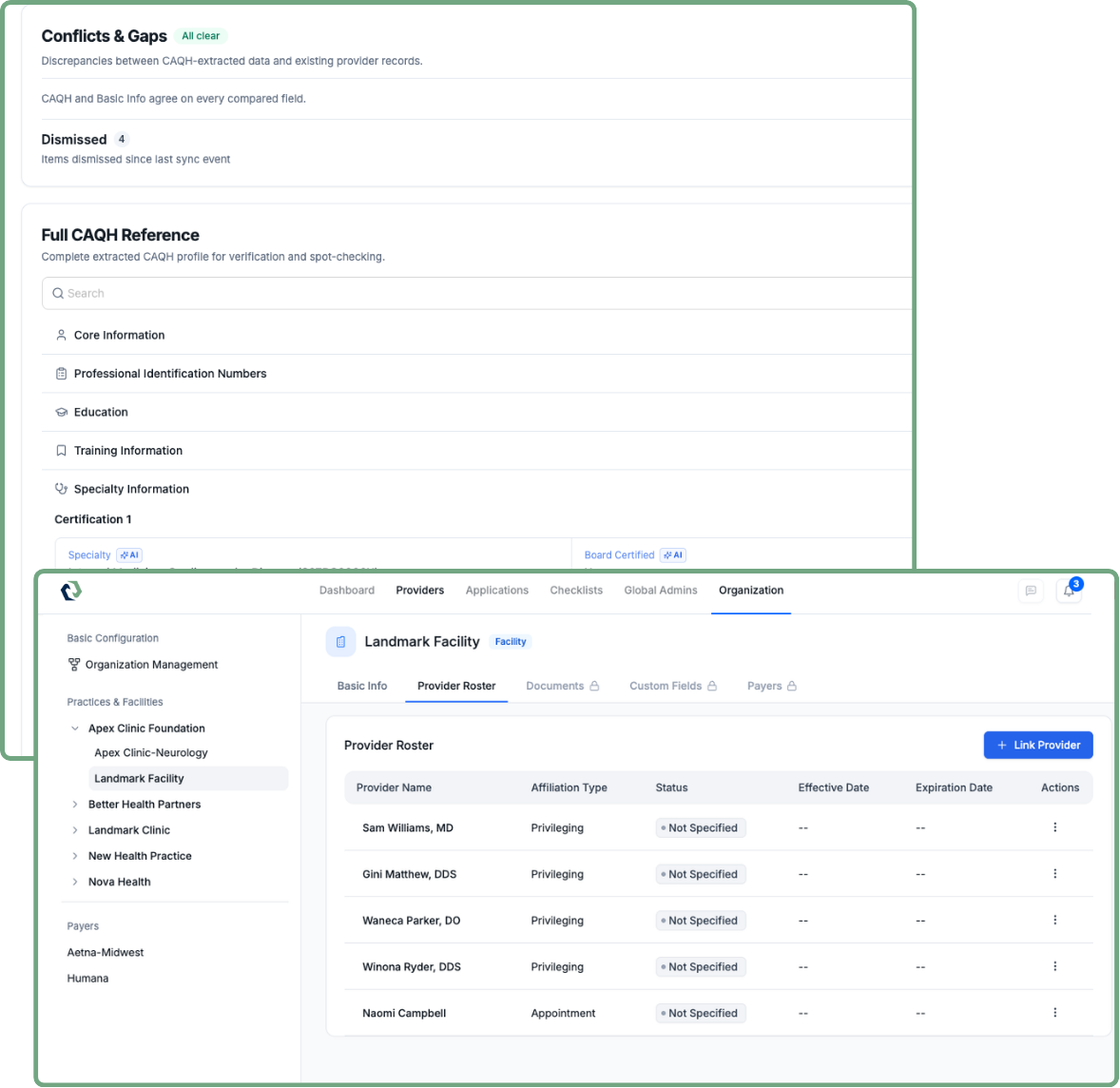
- AI-driven Document Extraction — license numbers, NPIs, certification IDs, and expiration dates pulled automatically from uploaded documents. Your team validates, not re-enters.
- Intelligent Validation at Submission — every roster submission checked for completeness and accuracy before it goes to the payer. Errors caught internally, not externally.
- Information Reuse Across Workflows — provider data entered once populates across credentialing, enrollment, and privileging. No duplicate entry, no version mismatch.
Every rejected roster is two more weeks of lost revenue. Stop sending them.
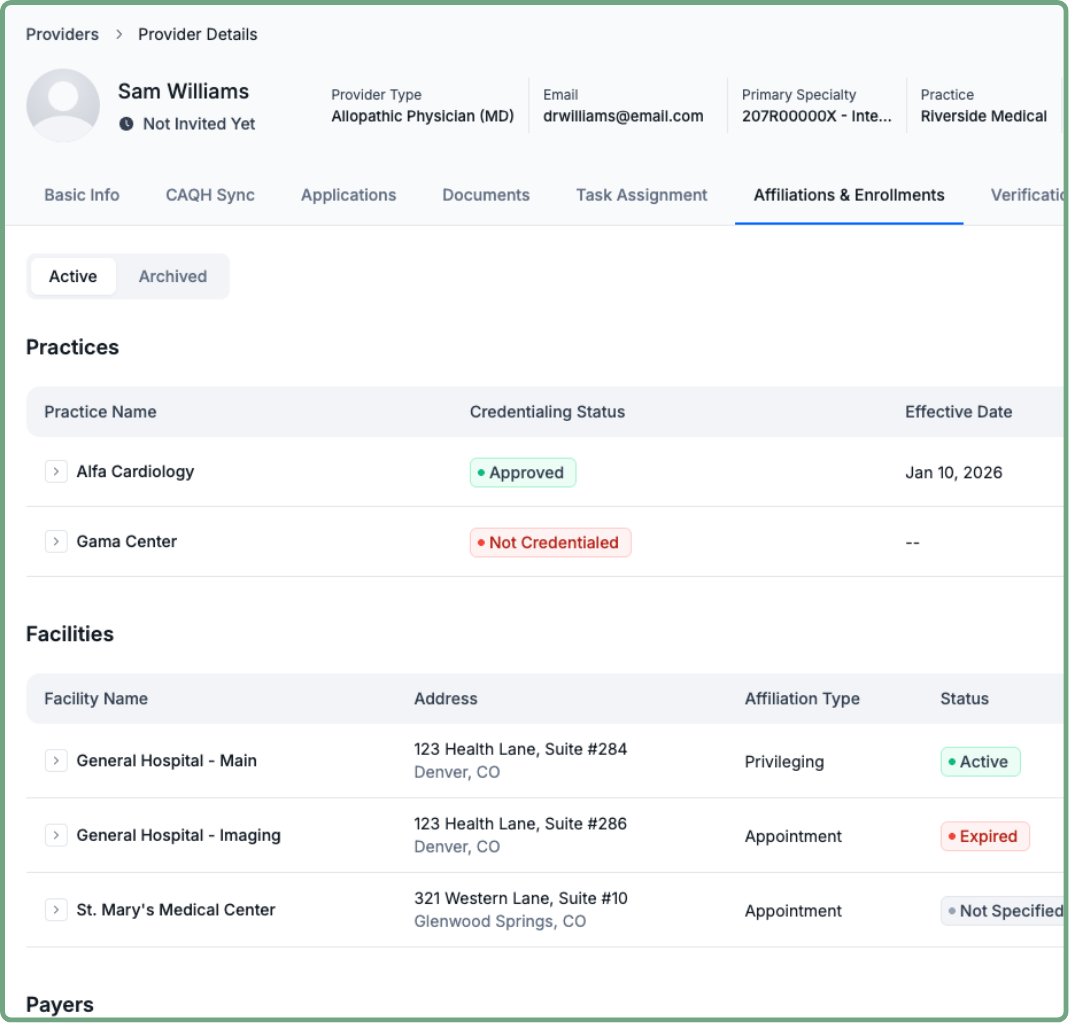
Expired credentials don't send warnings.
Licenses expire. DEA registrations lapse. Board certifications run out. In a manual credentialing environment, these expiration dates live in spreadsheets, and spreadsheets don't alert you until someone thinks to check. By the time an expired credential surfaces, it's already a compliance problem, a scheduling problem, and potentially a billing problem all at once.
How Zentium Fixes It:
- Automated Expiration Tracking — every license, certification, and enrollment monitored continuously with alerts triggered before expiration, not after.
- Proactive Renewal Workflows — renewal tasks initiated automatically at configurable lead times. Your team works ahead of deadlines, not behind them.
- Centralized Credential Repository — all provider documentation in one place, organized and searchable. No more hunting across shared drives, email folders, or filing cabinets.
- Compliance Status by Provider — see at a glance which providers are fully current, which have upcoming renewals, and which have an open issue requiring action.
- Expiration Risk Dashboard — surface upcoming expirations, renewal gaps, and compliance risks across your entire provider roster in one view. Nothing falls through the cracks.
Zero claims denied for an expired license.
You shouldn't need days to prep for an audit.
Audit preparation reveals what's been true all along: documentation is scattered, expirations have been missed, and assembling a complete file means pulling records from multiple systems, inboxes, and folders. The audit isn't the problem, the process that made audit prep a crisis is. And if you're spending days getting ready for a review, you're spending days not doing anything else.
How Zentium Fixes It:
- Audit-Readiness Dashboard — a real-time view of credential file completeness across every provider. Leadership always knows where they stand, not just when a review is scheduled.
- Document Completeness Validation — every file checked continuously for missing documents, incomplete fields, and expired credentials. Missing items flagged before they become audit findings.
- Full Document and Data History — complete, timestamped audit trail of every submission, verification, and decision. Always accessible, always organized.
- Standardized Workflows — consistent documentation and process steps enforced across every provider and facility. Audit prep looks the same every time because the process is the same every time.
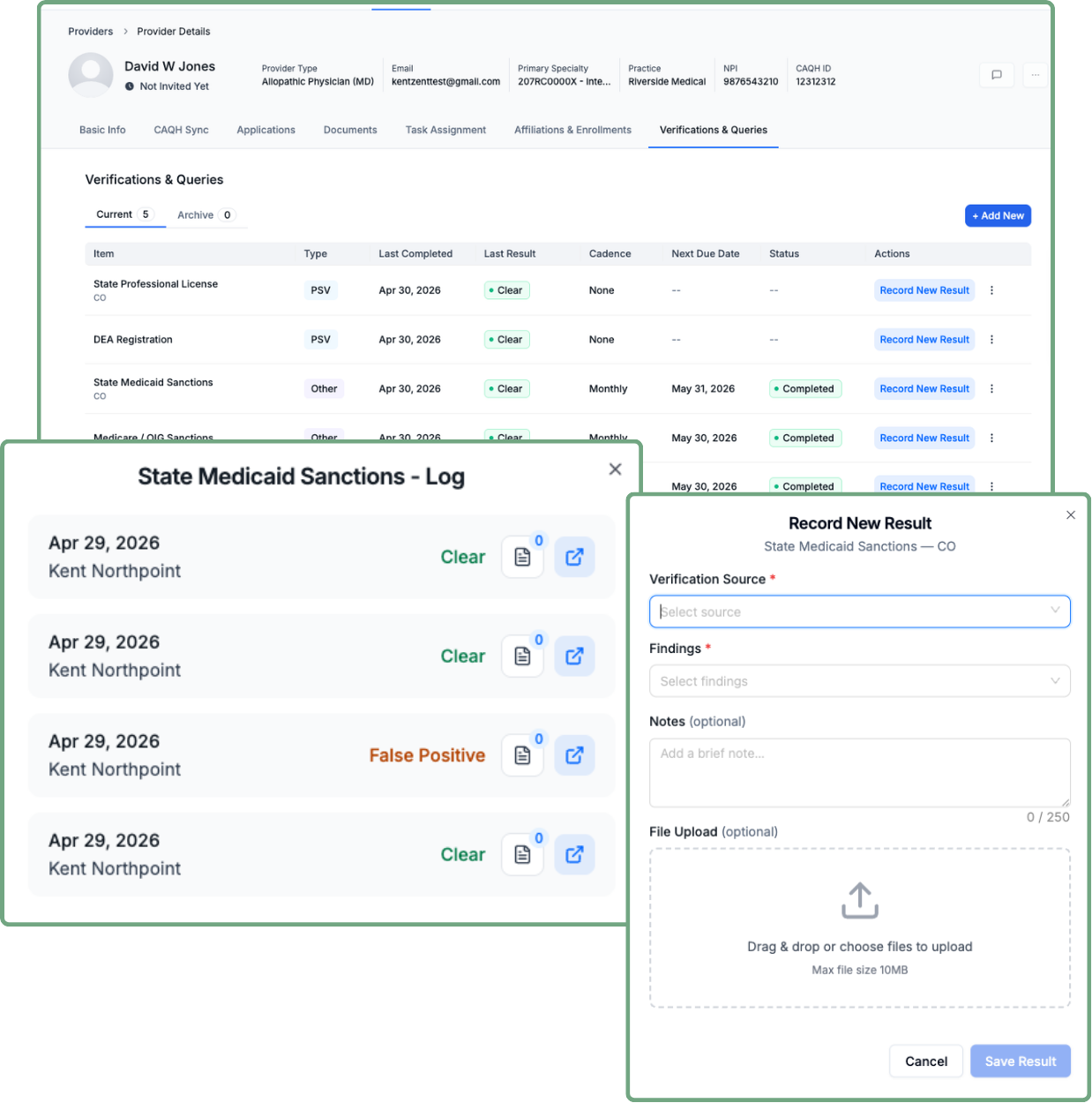
- Primary Source Verification with Full Audit Trail — every query to issuing boards, agencies, and registries logged with source, timestamp, and result. Verifications defensible on their face, without reconstruction.
Minutes, not days to produce audit-ready credential packets — and a defensible audit trail behind every one.
ZenSync™
AI-Driven Workforce Scheduling
Reactive scheduling isn't just inefficient, it's expensive. ZenSync replaces manual coordination with predictive, credential-aware scheduling that fills gaps before they open and keeps clinicians from burning out.
$30K–$50K a year. That's what manual scheduling costs you.
Manual scheduling isn't free. Between the staff hours spent building schedules, the time lost to revisions, the cost of errors, and the administrative overhead of coordinating shift changes across departments — the price adds up quickly. Most organizations don't have a line item for it because it's distributed across salaries and invisible in operational reports. But it's there.
How Zentium Fixes It:
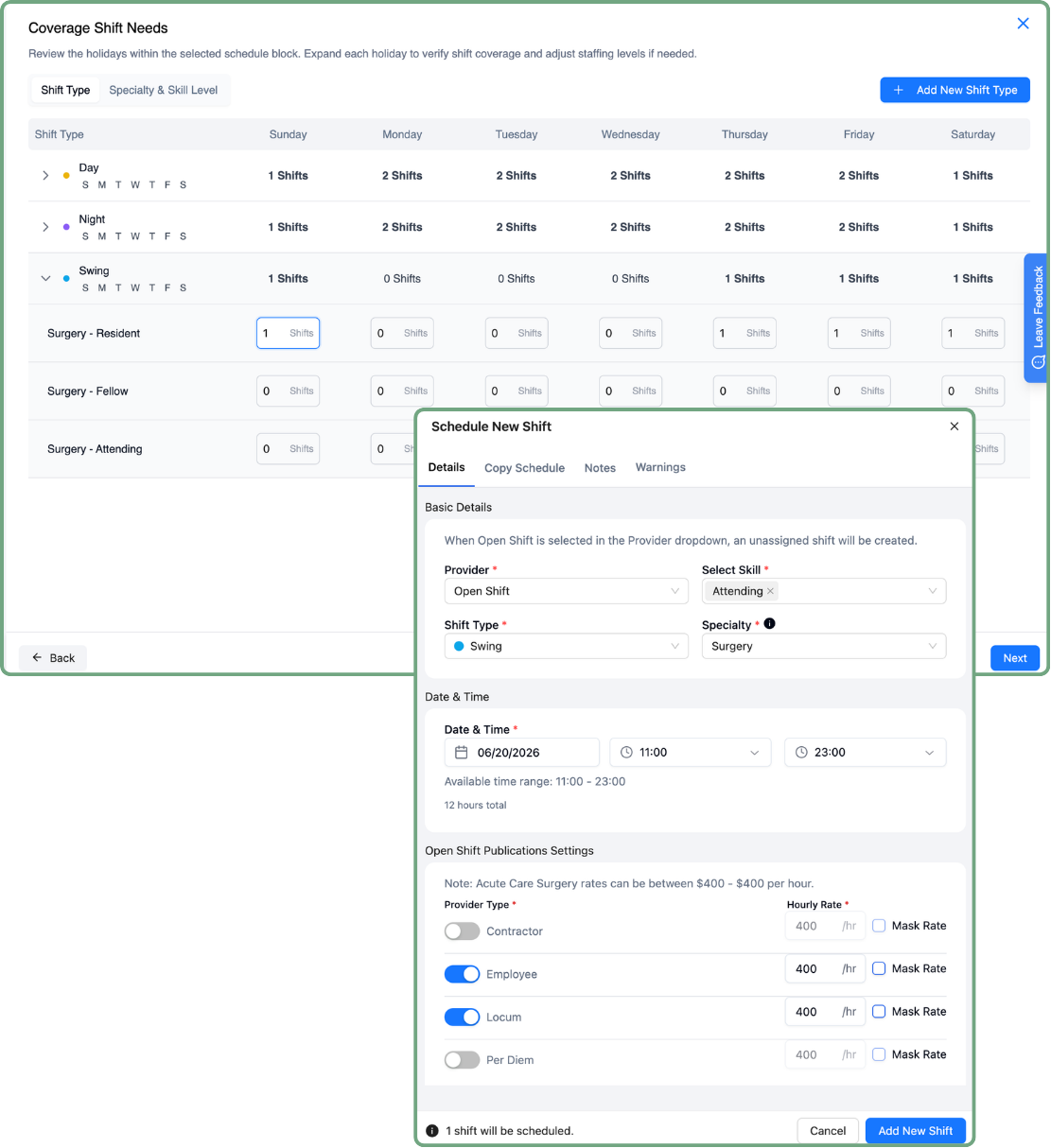
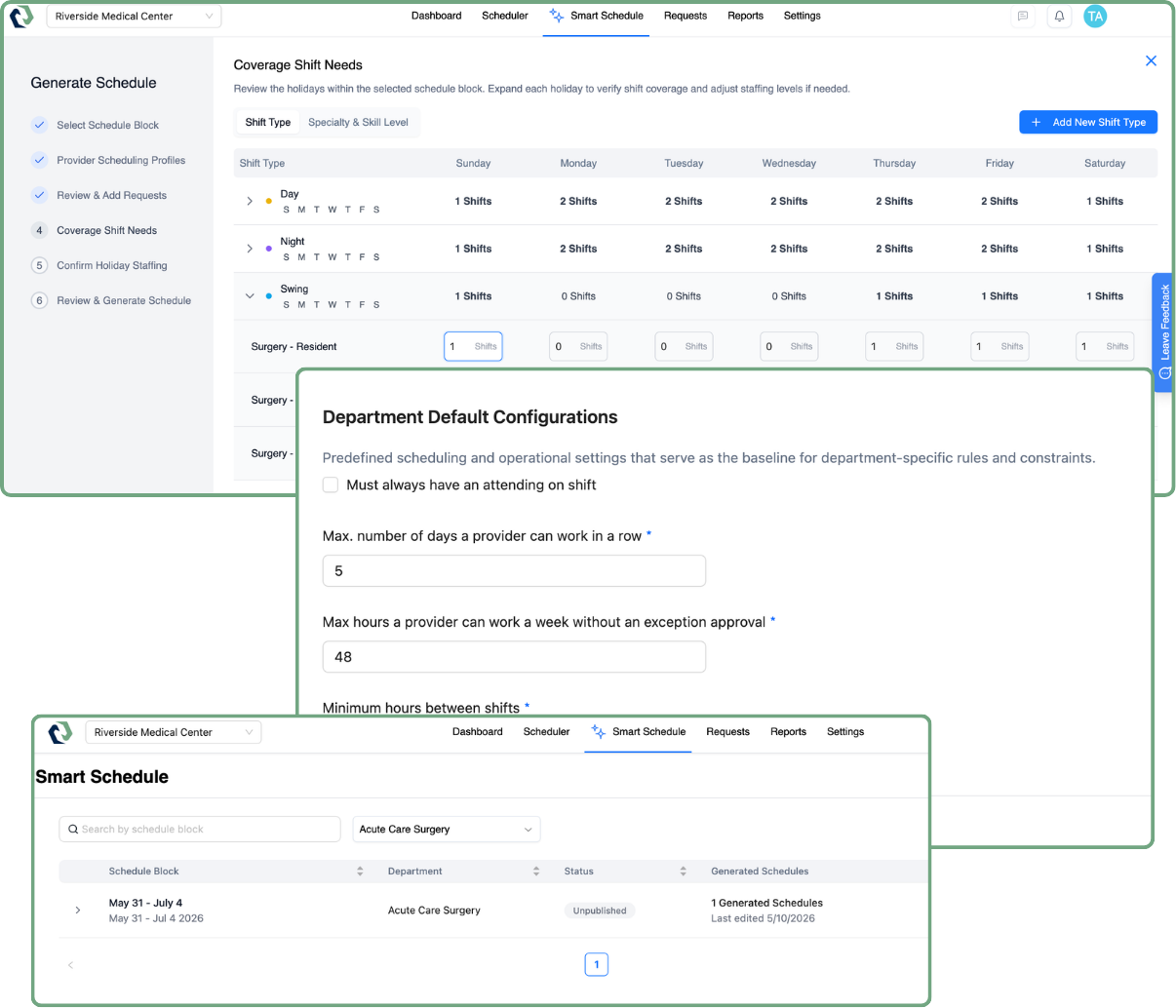
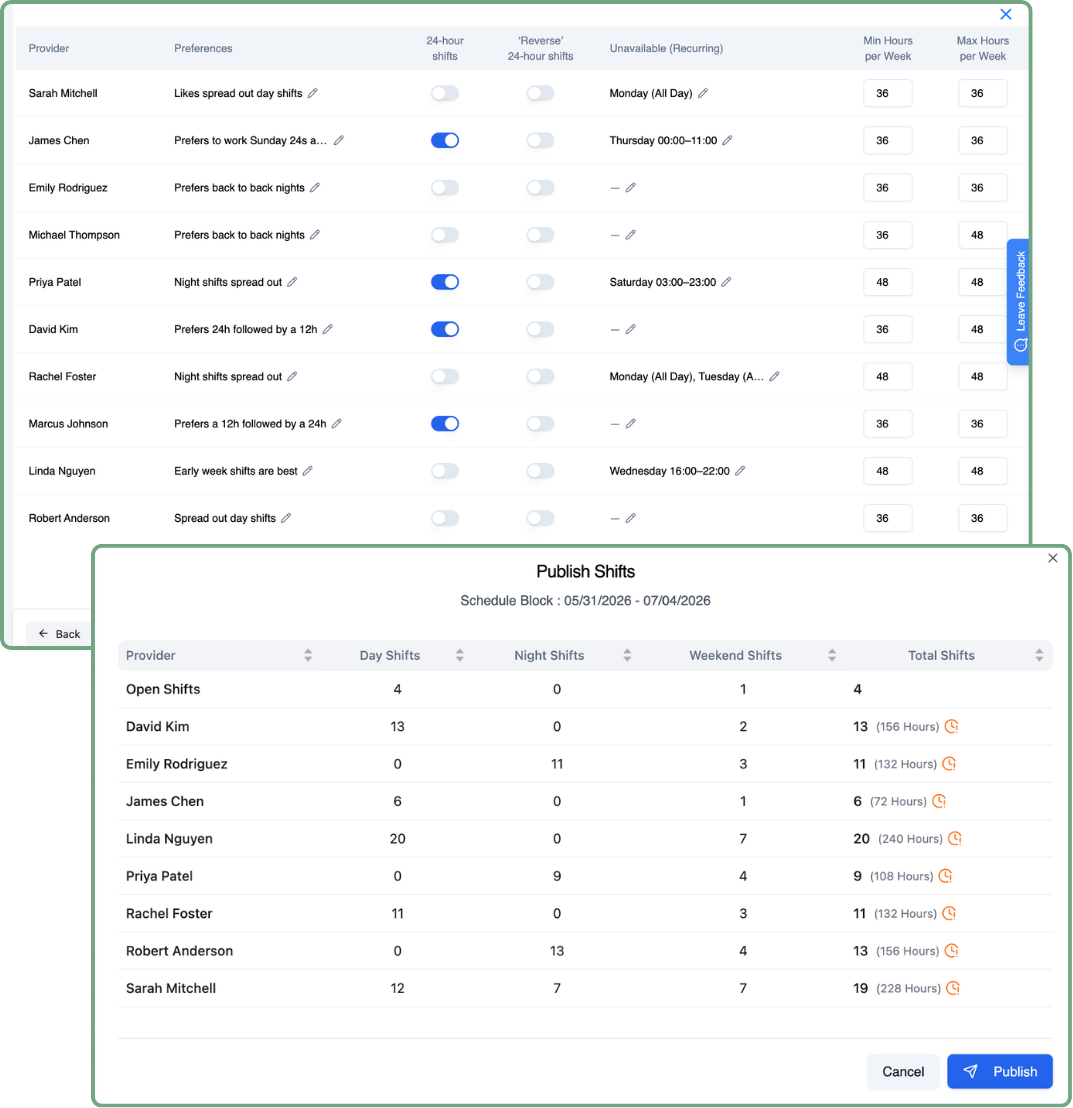
- AI-Driven Schedule Generation — schedules built automatically based on coverage requirements, provider credentials, preferences, and historical demand. Hours of manual work reduced to minutes.
- Automated Shift Management — open shifts identified, filled, and confirmed without manual coordination. Gaps surfaced before they become last-minute scrambles.
- Cross-Facility Scheduling from One View — administrators manage every department, location, and care setting from a single platform. No more juggling separate tools or spreadsheets per site.
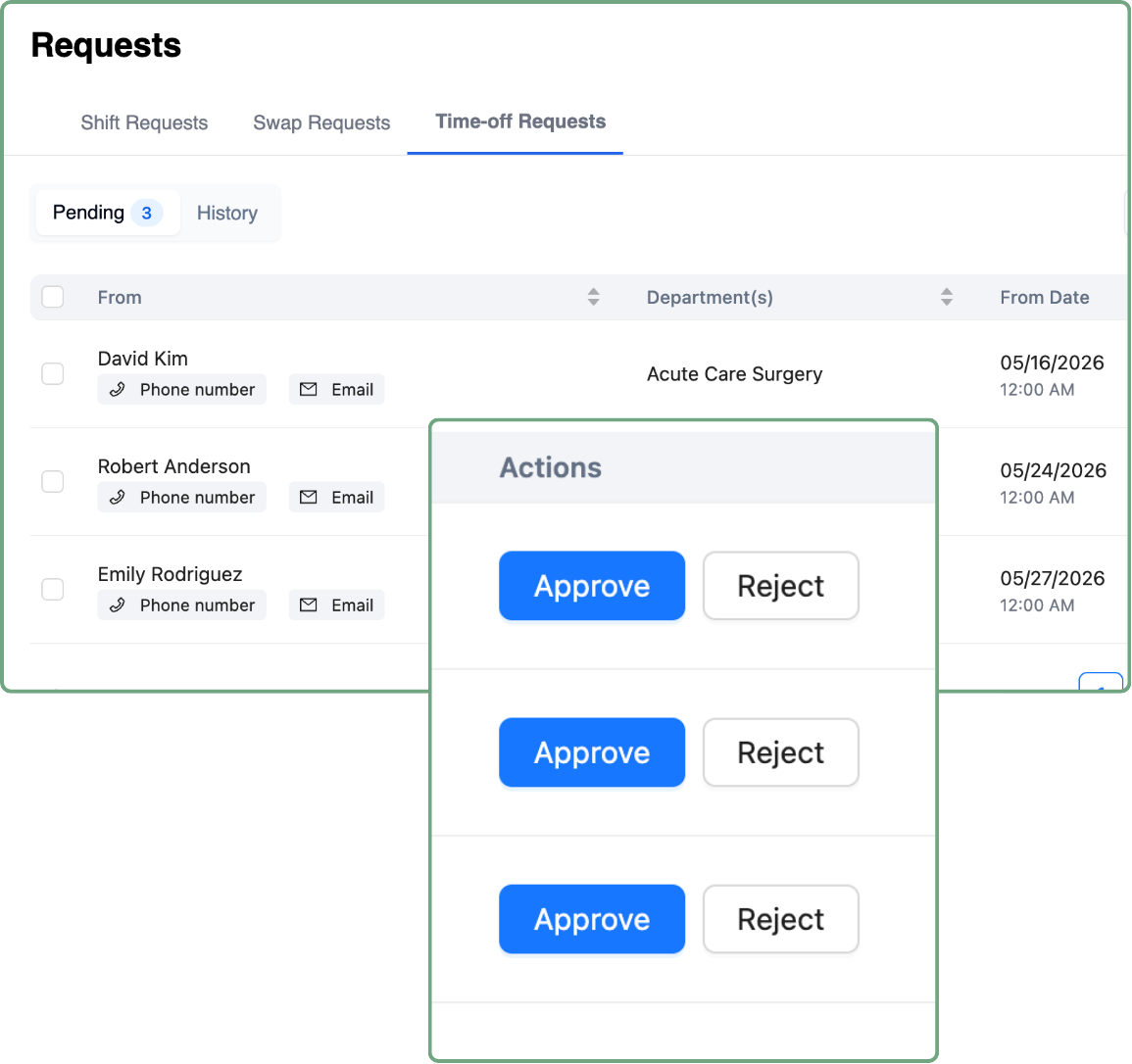
- Workflow Automation for Schedule Changes — shift swaps, time-off requests, and coverage adjustments handled through the platform with configurable approval workflows. No text chains. No email threads.
80% reduction in scheduling hours
You can't fix gaps you
can't see.
Coverage gaps in the ICU, ER, and high-acuity units aren't always a headcount problem. Often, the staff is there — but no one has real-time visibility into where they are, what they're cleared for, and whether they're available. By the time a gap surfaces, it's already a crisis. The problem isn't the gap. It's that no one saw it coming.
How Zentium Fixes It:
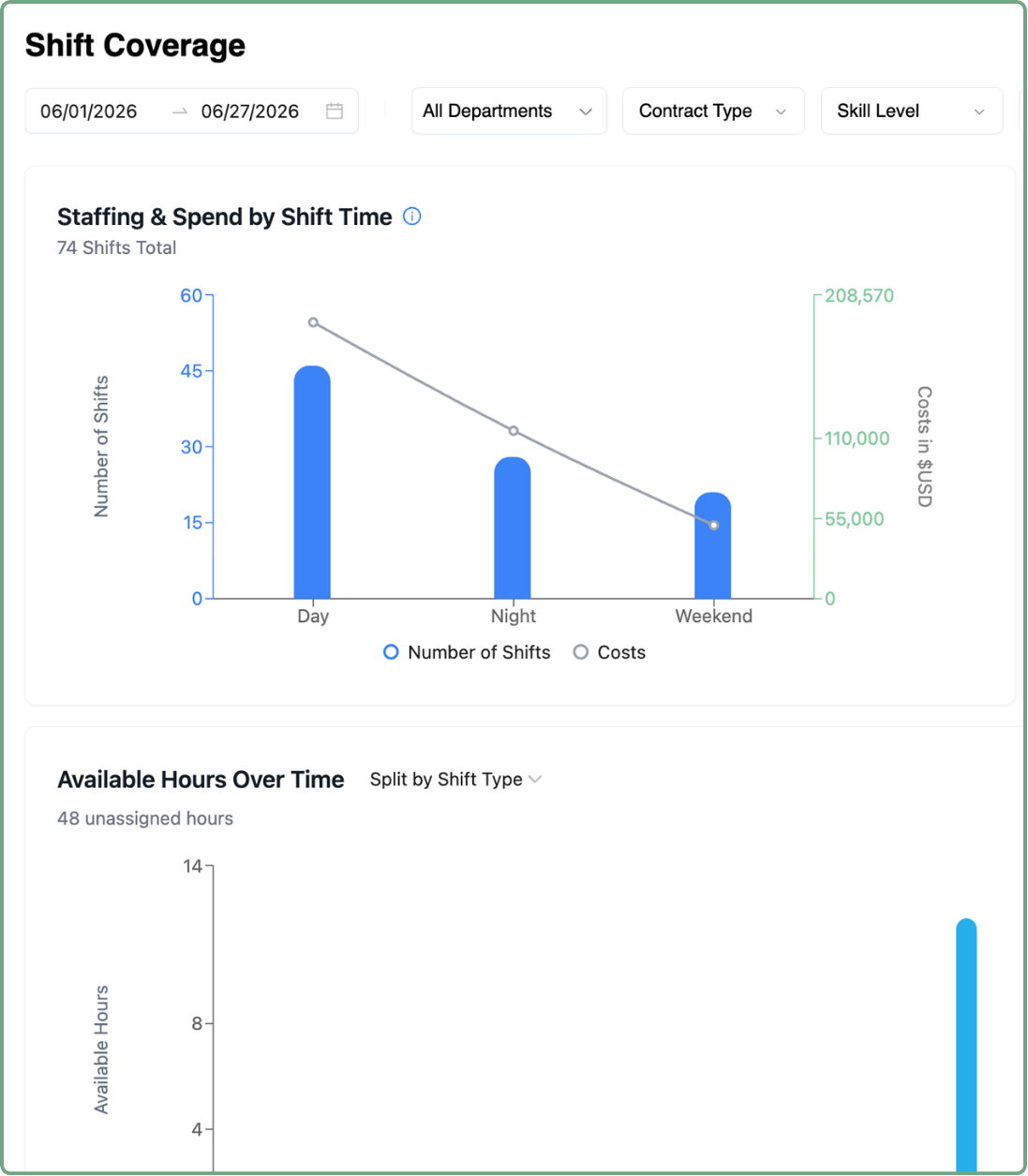
- Real-Time Coverage Dashboard — see provider availability and shift status across every unit and facility, updated live. No calls to find out who's in.
- Predictive Gap Alerts — coverage shortfalls identified in advance based on demand patterns and scheduled availability. Your team acts before the shift, not during it.
- Credential-Aware Scheduling — providers only surface as available for units and roles they're actually cleared for. Coverage decisions based on real data, not assumptions.
- System-Wide Visibility for Leadership — VPs and COOs see workforce readiness across the entire organization without asking their team for a status update.
65% reduction in time identifying
coverage gaps
Unbalanced scheduling is why providers leave.
Providers notice when scheduling is arbitrary. When the same people get the undesirable shifts. When preferences are ignored. When last-minute changes happen without explanation or recourse. They don't always say something right away — but they remember. And eventually, they leave. Physician turnover costs $500K to $1M per departure when you account for recruitment, onboarding, and lost productivity. Scheduling is one of the most controllable variables in retention.
How Zentium Fixes It:
- Provider Preference Integration — shift preferences, location preferences, and scheduling constraints built into every scheduling decision. Providers aren't accommodated as an exception, their preferences are part of the system.
- Equitable Shift Distribution — scheduling logic that tracks and balances shift assignments across providers. No one carries a disproportionate share of night shifts, weekends, or on-call without visibility into it.
- Mobile Schedule Access and Transparency — providers see their schedules, upcoming shifts, and any changes in real time from the app. No surprises, no information asymmetry.
- Shift Swap and Time-Off Management — providers handle their own scheduling adjustments through the platform, within guardrails administrators set. Less friction, more autonomy.
$500K–$1M cost per physician departure - scheduling equity is one of the most controllable retention levers
Scheduling over text and email is a liability.
When shift confirmations happen over text, schedule changes get communicated by email, and coverage decisions are made in a group chat — you don't have a scheduling system. You have a fragmented communication system that creates documentation gaps, compliance risk, and constant back-and-forth. If something goes wrong, there's no reliable record of who was scheduled, who confirmed, and who made the call to change it.
How Zentium Fixes It:
- Centralized Scheduling Communication — all schedule-related communication happens in ZenSync. Confirmations, changes, swap requests, approvals. One thread. One record.
- Automated Notifications and Confirmations — schedule changes trigger automatic notifications to affected providers. No manual outreach, no missed updates.
- Complete Audit Trail — every scheduling decision logged with timestamp, actor, and rationale. When questions arise, the record is there.
- Configurable Approval Workflows — shift swaps and coverage changes route through defined approval steps before confirming. Nothing changes without the right sign-off.
70% reduction in scheduling back-and-forth
Reliance on last-minute locums is expensive. ZenSync reduces the need.
Locums and per diem staff have a place in healthcare workforce strategy. But when they're the default response to a coverage gap — instead of a planned option of last resort — costs spiral. The gap that could have been filled by a cleared float pool provider two days ago becomes an emergency locum placement today. And emergency placements carry a premium your budget didn't budget for.
How Zentium Fixes It:
- Predictive Scheduling to Prevent Reactive Gaps — demand forecasted in advance so coverage shortfalls are visible days or weeks before the shift, not hours before.
- Float Pool Visibility and Optimization — see which internal providers are available, cleared, and deployable across facilities before going external. Float pool utilized first.
- Internal Fill before External Escalation — ZenSync surfaces available internal coverage options before flagging a gap as unresolvable. Locums become a last resort, not a default.
- Agency Spend Tracking — visibility into how much external staffing is being used, where, and why — so leadership can make informed decisions about float pool sizing and workforce planning.
$1,500 saved per avoided per diem shift